
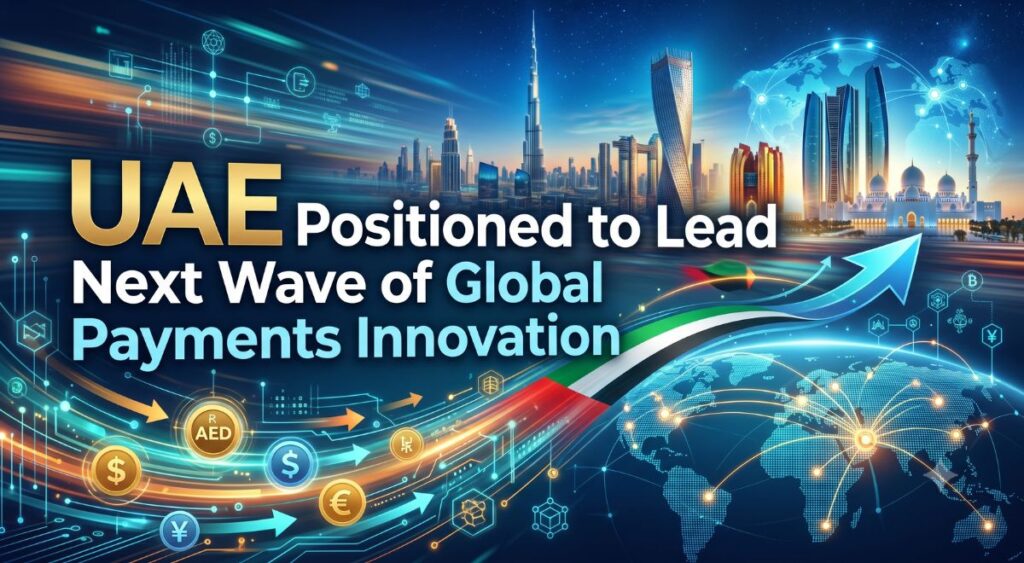
The UAE is strengthening its position as a global hub for stablecoins and digital assets as the country continues to advance its technology-driven economic transformation agenda.
Since introducing its National AI Strategy in 2017 and expanding investments in digital infrastructure, the UAE has consistently embraced emerging technologies. This forward-looking approach is now shaping the future of the country’s payments sector, creating opportunities for faster domestic transactions and more efficient cross-border money transfers.
Industry experts believe stablecoins are moving beyond their early role as an alternative financial system and are becoming an integral part of mainstream financial infrastructure. Stablecoins are increasingly being used for remittances, treasury management, settlements, and international payments, offering businesses access to around-the-clock global transactions.
Unlike traditional banking systems that rely on established networks such as SWIFT, card schemes, and bank accounts, stablecoin ecosystems operate on blockchain technology with wallet-based accounts and continuous settlement capabilities. This has enabled businesses to move funds globally with greater speed and flexibility.
In the UAE, companies already use multiple payment channels depending on their needs. Traditional banking networks handle many international and local transfers, while card systems remain dominant for consumer transactions. At the same time, stablecoins are gaining traction as a tool for fast cross-border payments and global treasury operations.
Financial experts suggest the next major development in the payments industry will be the seamless integration of traditional banking infrastructure and blockchain-based payment systems. Businesses, financial institutions, and fintech companies are increasingly seeking solutions that allow transactions to move across both networks through a unified operational and compliance framework.
The UAE’s strategic location and strong trade links place it at the centre of global payment flows connecting the Middle East, Africa, Asia, and beyond. With significant remittance volumes and international trade activity passing through the country, the UAE is well-positioned to play a leading role in the evolution of next-generation payment infrastructure.
As global demand for faster and more efficient money movement grows, markets that combine clear regulation, strong infrastructure, and real-world demand are expected to shape the future of international payments.