

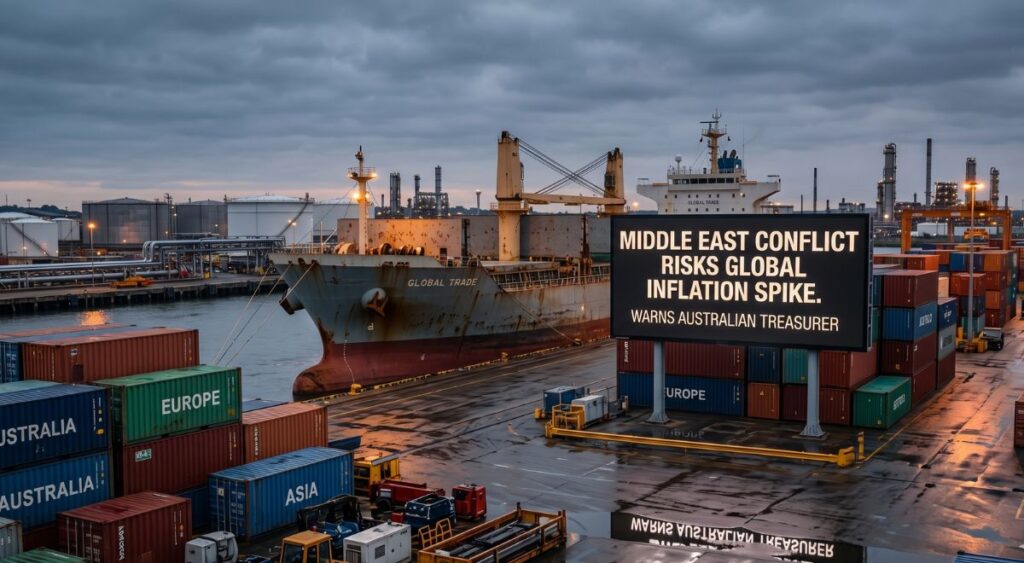
Global economic stability is once again under pressure as escalating tensions in the Middle East raise fears of a renewed surge in inflation. Jim Chalmers, Australia’s Treasurer, has cautioned that the ongoing conflict could disrupt global supply chains and drive up energy prices—two key factors that historically fuel inflation worldwide.
Rising Geopolitical Tensions and Economic Impact
The Middle East plays a critical role in global energy markets, particularly in oil and gas production. Any instability in the region can quickly translate into higher fuel prices, affecting transportation, manufacturing, and overall production costs across the globe. As conflict intensifies, investors and governments are closely monitoring potential disruptions to oil supply routes, especially through strategic chokepoints like the Strait of Hormuz.
Chalmers emphasized that even the perception of risk in the region can trigger volatility in global markets. Oil prices often react sharply to geopolitical uncertainty, and prolonged instability could lead to sustained price increases. This, in turn, places upward pressure on inflation rates in both developed and emerging economies.
Inflation: A Renewed Global Threat
After a period of gradual recovery from post-pandemic inflation, many economies were beginning to stabilize. However, renewed conflict risks reversing this progress. Rising energy costs tend to have a ripple effect—impacting food prices, logistics, and consumer goods.
Central banks, which have already been navigating the delicate balance between controlling inflation and supporting economic growth, may face renewed challenges. Higher inflation could force policymakers to maintain or even increase interest rates, potentially slowing down economic recovery.
Supply Chain Disruptions
Beyond energy, the Middle East conflict could also disrupt global supply chains. The region is a key transit hub for international trade, linking Asia, Europe, and Africa. Any interruption to shipping routes or increased security risks could lead to delays, higher freight costs, and shortages of essential goods.
Such disruptions were seen during previous geopolitical crises and the COVID-19 pandemic, where bottlenecks significantly contributed to inflationary pressures. A repeat scenario could once again strain global trade systems.
Australia’s Perspective
For Australia, the risks are both direct and indirect. As a trade-dependent economy, Australia is sensitive to global market fluctuations. Higher fuel costs can increase domestic inflation, affecting households and businesses alike. Additionally, global uncertainty may impact export demand, particularly from key trading partners in Asia.
Chalmers noted that while Australia’s economy remains resilient, it is not immune to global shocks. The government is closely monitoring developments and remains prepared to respond if necessary.