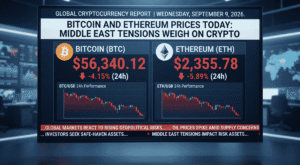

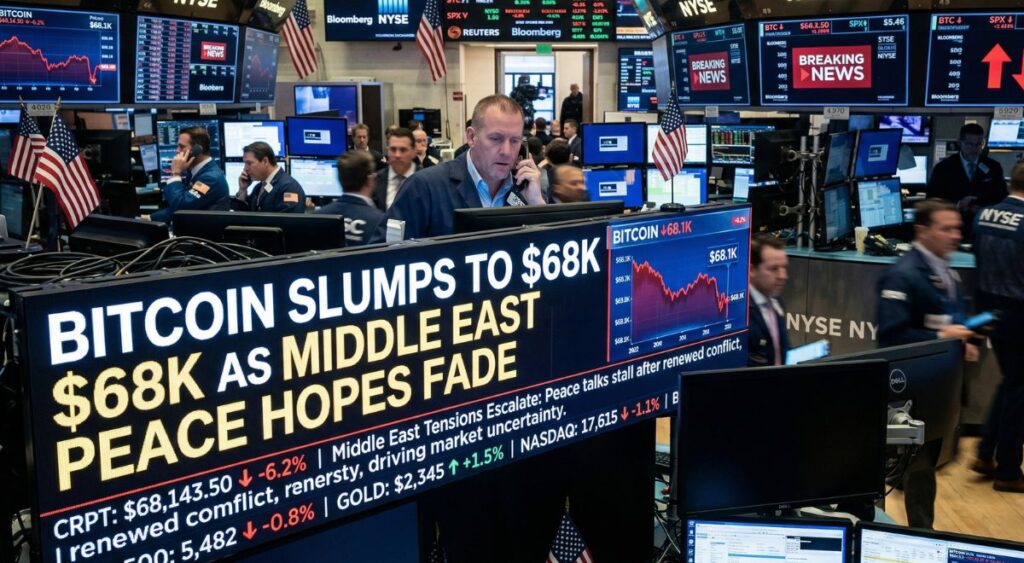
Bitcoin experienced a sharp pullback, slipping to the $68,000 level as renewed geopolitical uncertainty in the Middle East weighed on global financial markets. The leading cryptocurrency, Bitcoin, had been showing resilience in recent weeks but came under pressure as hopes for de-escalation in the region began to diminish.
Geopolitical Tensions Shake Market Confidence
Investor sentiment turned cautious after reports indicated that diplomatic efforts to stabilize tensions in the Middle East were losing momentum. Historically, geopolitical instability has had a mixed impact on crypto markets. While some investors view digital assets as a hedge against traditional financial risks, others shift toward safer, more stable assets during periods of uncertainty.
This time, the latter appears to dominate market behavior. As uncertainty grew, traders began reducing exposure to riskier assets, triggering a wave of selling pressure across the crypto market.
Broader Market Reaction
Bitcoin’s decline also dragged down other major cryptocurrencies, including Ethereum and Solana, both of which recorded notable losses. The broader digital asset market mirrored the cautious tone seen in global equities and commodities.
At the same time, traditional safe-haven assets such as gold saw increased demand, highlighting a shift in investor preference amid rising uncertainty.
Profit-Taking and Technical Pressure
Market analysts suggest that Bitcoin’s drop to $68K was not solely driven by geopolitical concerns. The cryptocurrency had been trading near recent highs, prompting profit-taking among investors. This combination of external risk factors and internal market dynamics accelerated the downward movement.
Technical indicators also pointed to a short-term correction, with key support levels being tested as selling intensified.
What’s Next for Bitcoin?
Despite the recent dip, long-term sentiment around Bitcoin remains cautiously optimistic. Institutional interest continues to grow, and many analysts believe that temporary setbacks are part of the asset’s natural market cycle.
However, in the short term, Bitcoin’s trajectory will likely remain closely tied to global developments—particularly geopolitical stability and macroeconomic signals. Any signs of renewed peace efforts in the Middle East could help restore confidence and support a market rebound.