

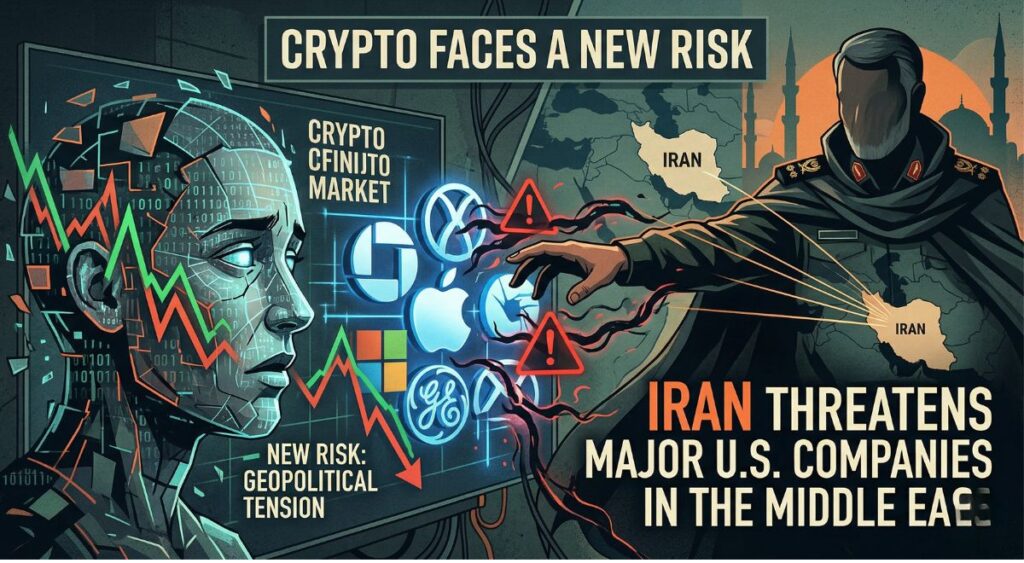
Rising geopolitical tensions in the Middle East are once again shaking global markets—but this time, the impact is extending beyond traditional assets and directly into the cryptocurrency ecosystem. As Iran escalates its stance by threatening major U.S. companies operating in the region, crypto markets are facing a new and complex layer of risk.
A New Kind of Target: Corporations in the Crosshairs
Recent statements from Iran’s military leadership signal a major shift in modern conflict. Instead of focusing solely on governments or military assets, Iran has warned that major American corporations—particularly tech giants—could be treated as “legitimate targets” in the Middle East.
Companies such as Apple, Microsoft, Google, and Boeing have reportedly been named in these warnings, highlighting how deeply embedded corporate infrastructure has become in geopolitical strategy.
This development is critical for crypto because many of these firms support the underlying digital infrastructure—cloud services, AI systems, and financial technologies—that crypto markets rely on.
Why This Matters for Crypto
Cryptocurrency is often marketed as a decentralized and borderless system, but in reality, it depends heavily on centralized components such as:
- Cloud infrastructure (data centers, hosting)
- Internet connectivity and telecom networks
- Exchanges and custodial services
- Mining operations and energy supply
If U.S. tech infrastructure in the Middle East becomes a target, disruptions could ripple across the crypto ecosystem.
For example, previous attacks and instability in the region have already exposed vulnerabilities in cloud systems and data centers, leading to outages and operational disruptions.
Market Reactions: Crypto Is Not Immune
Despite its reputation as “digital gold,” crypto has consistently behaved like a risk-sensitive asset during geopolitical crises.
- Bitcoin and other cryptocurrencies have seen sharp drops during conflict escalations
- Panic selling and liquidations often follow major geopolitical headlines
- Recovery tends to happen—but only after volatility spikes
In recent tensions, Bitcoin experienced sudden sell-offs and increased volatility as investors moved toward safer assets.
Similarly, broader market fear during Middle East conflict has pushed crypto prices downward alongside stocks.
Mining, Energy, and Supply Chain Risks
Iran plays a notable role in global crypto mining, thanks to subsidized energy and state-backed operations. However, ongoing conflict threatens:
- Mining infrastructure disruption
- Forced liquidation of crypto reserves
- Energy supply instability (especially around the Strait of Hormuz)
Even a temporary disruption in mining activity can affect global hash rates and market sentiment.
Cybersecurity Threats Add Another Layer
Beyond physical attacks, cybersecurity risks are rising sharply.
Experts warn that Iranian-linked cyber groups may target U.S. companies and infrastructure, including financial systems and cloud platforms.
For crypto, this could mean:
- Exchange outages or hacks
- Delays in transaction processing
- Increased risks for wallets and custodians
The Bigger Picture: Crypto as a Geopolitical Asset
The situation highlights a growing reality: crypto is no longer separate from global politics—it is deeply intertwined with it.
- Governments may use crypto to bypass sanctions
- Investors react to geopolitical uncertainty
- Infrastructure supporting crypto is vulnerable to real-world conflict
At the same time, crypto outflows from high-risk regions have surged during crises, showing how digital assets are used as a financial escape route.