

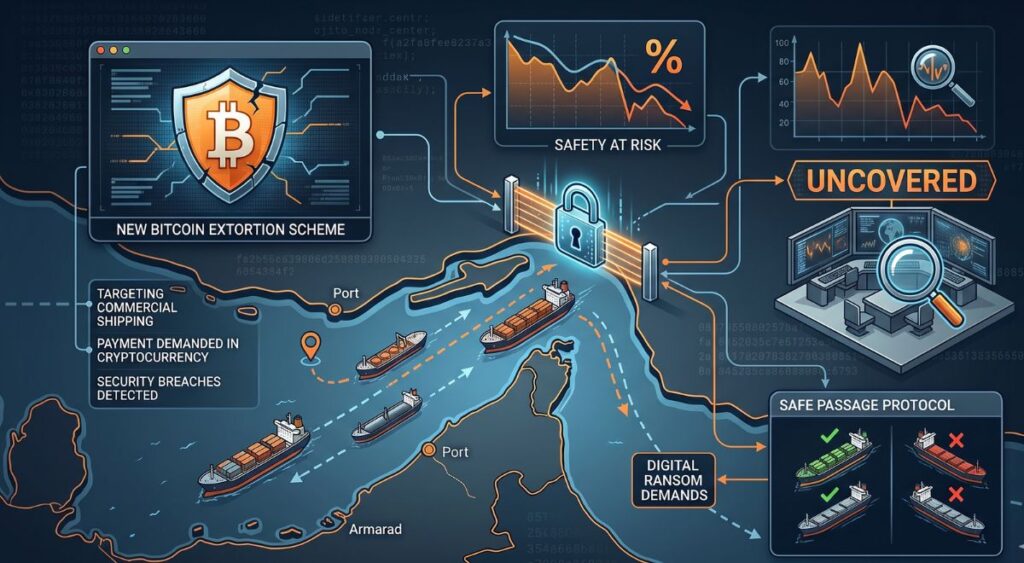
A troubling new cyber-enabled extortion scheme has emerged in one of the world’s most strategically vital waterways, the Strait of Hormuz. According to maritime security analysts, criminal networks are increasingly targeting commercial vessels with demands for Bitcoin payments in exchange for “safe passage” through the narrow and heavily trafficked corridor.
A Digital Twist on Maritime Threats
Traditionally, threats to ships in the Strait of Hormuz have included piracy, geopolitical tensions, and military confrontations. However, this new scheme represents a shift toward hybrid threats that combine cybercrime with physical intimidation. Vessel operators have reported receiving anonymous messages—often via satellite communications or compromised onboard systems—warning of potential disruptions unless cryptocurrency payments are made.
The use of Bitcoin allows perpetrators to operate with relative anonymity, making it difficult for authorities to trace transactions or identify those behind the scheme.
How the Scheme Works
Investigations suggest that attackers may be exploiting vulnerabilities in maritime communication systems or accessing publicly available shipping data to identify targets. Once a vessel enters the region, operators receive threats claiming that failure to comply could result in GPS interference, cyber disruptions, or even physical targeting by unknown actors.
While there is limited evidence that such threats have been carried out on a large scale, the psychological pressure alone has proven effective in some cases, particularly for smaller operators lacking robust cybersecurity defenses.
Strategic Importance of the Strait
The Strait of Hormuz is a critical artery for global energy supplies, with roughly a fifth of the world’s oil passing through it daily. Any disruption—real or perceived—can have immediate ripple effects on global markets. The emergence of cyber-enabled extortion adds another layer of complexity to an already volatile region.
Industry and Government Response
Maritime authorities and international organizations are urging shipping companies to strengthen cybersecurity protocols and avoid engaging with extortionists. Security advisories emphasize the importance of:
- Updating onboard systems and communication networks
- Training crew to recognize phishing or spoofed messages
- Reporting incidents to maritime security agencies
There are also growing calls for coordinated international action to address the misuse of cryptocurrencies in maritime crime. While blockchain technology itself is not inherently illicit, its anonymity features continue to attract bad actors.
A New Era of Maritime Risk
The discovery of this Bitcoin-based extortion scheme underscores the evolving nature of threats in global shipping. As digital systems become more integrated into maritime operations, the line between cyber and physical security continues to blur.
For shipping companies navigating the Strait of Hormuz, vigilance is no longer limited to radar and patrols—it now extends into the digital domain, where unseen threats can be just as disruptive as those on the water.