
In a troubling sign of how cybercrime is evolving alongside geopolitical tensions, maritime operators transiting the Strait of Hormuz are being targeted by crypto-based scams promising “safe passage” through one of the world’s most sensitive shipping corridors.
A New Type of Maritime Fraud
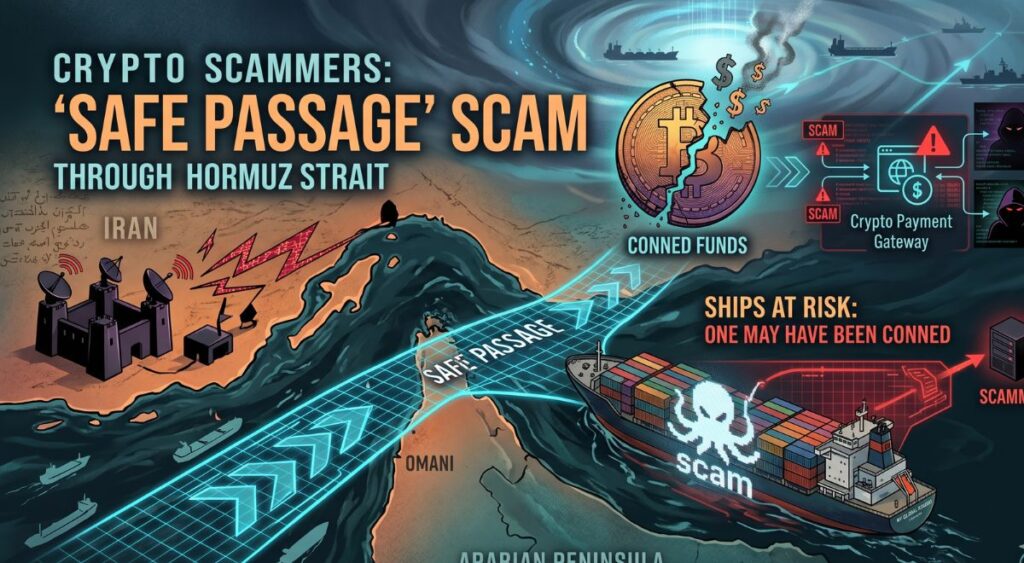
According to emerging reports from maritime security analysts, scammers posing as regional “security coordinators” or unofficial intermediaries have been contacting shipping companies and vessel operators. Their pitch is simple but alarming: pay a fee in cryptocurrency, and your vessel will be guaranteed safe transit through the high-risk waters of the Gulf.
These fraudsters often claim connections to regional militias or security networks, exploiting fears stemming from ongoing tensions involving Iran, nearby Gulf states, and global naval forces operating in the area.
At Least One Vessel Potentially Targeted
Industry sources suggest that at least one ship may have fallen victim to the scheme, transferring funds in cryptocurrency under the belief that it would reduce the risk of harassment, detention, or attack. While details remain limited, investigators believe the scammers used convincing tactics, including spoofed communications and knowledge of maritime protocols.
Security experts warn that the use of cryptocurrency—difficult to trace and recover—makes such scams particularly dangerous and attractive to organized cybercriminal groups.
Exploiting a Critical Chokepoint
The Strait of Hormuz carries roughly a fifth of the world’s oil supply, making it one of the most strategically important waterways on the planet. Any disruption—real or perceived—can have global economic consequences.
By exploiting this environment of uncertainty, scammers are leveraging both fear and urgency. Fake assurances of “protection” are being marketed as a shortcut to avoid delays or potential threats in the region.
Growing Convergence of Cyber and Maritime Threats
This incident highlights a broader trend: the merging of cybercrime with traditional security risks. Maritime operations, long dependent on trust-based communication systems, are increasingly vulnerable to digital manipulation.
Organizations such as the International Maritime Organization have previously warned about rising cyber threats targeting shipping infrastructure, but the use of crypto-extortion tied directly to physical transit risks marks a new escalation.
Industry Response and Warnings
Shipping companies are now being urged to verify all communications through official naval coordination channels and to avoid engaging with unsolicited “security offers.” Authorities stress that no legitimate entity will request cryptocurrency payments for safe passage.
Experts also recommend enhanced crew training, stronger cyber verification protocols, and coordination with naval forces operating in the region.
A Sign of Things to Come
As geopolitical tensions persist and digital currencies remain widely accessible, experts fear this type of hybrid scam could spread to other high-risk maritime zones.
For now, the message from regulators and security professionals is clear: if someone offers guaranteed safety in exchange for crypto, it’s almost certainly a scam—and a potentially costly one.