

Image Credit : REUTERS
As geopolitical tensions escalate across the Middle East, the ongoing Iran conflict is testing the resilience of global industries. While sectors like energy, aviation, and traditional finance have experienced visible disruptions, the cryptocurrency industry in the United Arab Emirates (UAE) is showing an unexpected level of stability.
A Conflict That Shook Traditional Markets
The war has triggered volatility across global markets, particularly in oil and transportation. The Strait of Hormuz—a critical artery for global energy supply—has faced disruptions, pushing oil prices higher and creating uncertainty in trade and logistics.
In the UAE, missile interceptions and regional security concerns have led to flight delays, temporary office closures, and the postponement of major events. One of the most notable impacts was the delay of the TOKEN2049 crypto conference in Dubai, highlighting how physical gatherings remain vulnerable during geopolitical crises.
Yet, amid this turbulence, the crypto sector appears to be operating under a different set of rules.
Why Crypto Is Holding Strong
Unlike traditional industries that rely heavily on physical infrastructure, crypto operates in a decentralized, digital-first environment. This structural advantage has allowed businesses in the UAE to continue functioning with minimal disruption.
Executives and professionals in the region report that daily operations remain largely unchanged, with teams shifting seamlessly to remote work. Cloud-based systems, decentralized exchanges, and global connectivity mean that even if employees relocate or travel is restricted, operations can continue uninterrupted.
This flexibility highlights a key strength of blockchain technology: it is not bound by geography. As long as there is internet access, trading, development, and investment activities can continue.
24/7 Markets in a 9-to-5 World Crisis
Another major advantage of cryptocurrency is its round-the-clock trading capability. While traditional financial markets close on weekends or during emergencies, crypto markets remain open 24/7.
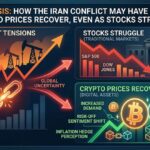
During the early stages of the Iran conflict, when global stock exchanges were closed, crypto platforms became the primary venue for real-time trading and price discovery. This allowed investors to react instantly to geopolitical developments rather than waiting for markets to reopen.
This continuous availability is increasingly positioning crypto as a parallel financial system—one that operates independently of traditional market schedules.
A Safe Haven—or Just More Resilient?
The role of cryptocurrency during conflicts is evolving. In some cases, it behaves like a risk asset, initially dropping during uncertainty. However, it often rebounds quickly, reflecting growing confidence in its long-term utility.
In regions directly affected by conflict, such as Iran, crypto has taken on an even more critical role. Reports indicate significant outflows from Iranian exchanges as individuals convert local currency into digital assets to preserve value and move funds خارج the traditional banking system.
This dual identity—both speculative asset and financial lifeline—underscores crypto’s increasing importance in modern economies.
UAE’s Crypto Hub Status Remains Intact
The UAE has positioned itself as a global hub for digital assets, supported by forward-thinking regulation and government-backed investments. Despite the regional instability, this foundation remains strong.
While some expatriates and firms have temporarily relocated due to safety concerns, many continue to operate remotely without interrupting business activities. The broader ecosystem—exchanges, investors, and developers—remains active and globally connected.
However, experts caution that the long-term impact will depend on how prolonged the conflict becomes. Extended instability could test even the most resilient digital systems.
The Bigger Picture
The Iran conflict is not just a geopolitical event—it is a real-world stress test for emerging technologies. Crypto’s ability to withstand disruption in the UAE highlights a shift in how modern financial systems operate.
While traditional industries remain vulnerable to physical and logistical challenges, crypto’s decentralized nature offers a glimpse into a more adaptable financial future. At the same time, its role in conflict zones raises new questions about regulation, security, and global financial oversight.