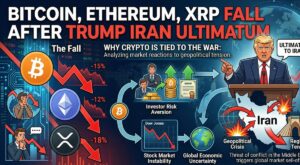

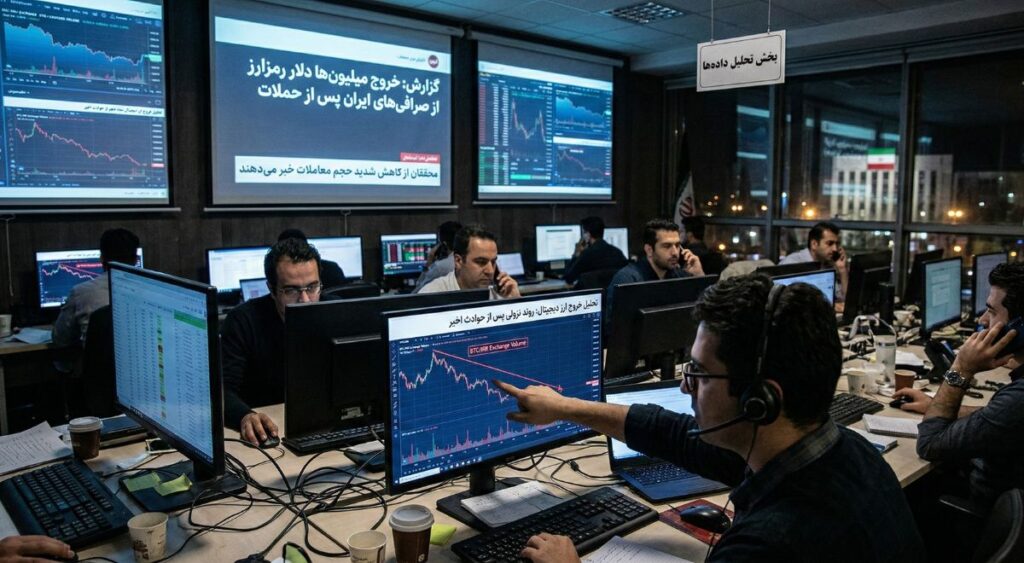
In the immediate aftermath of recent military strikes targeting sites inside Iran, millions of dollars’ worth of cryptocurrency were rapidly withdrawn from domestic digital asset exchanges, according to blockchain analytics researchers. The sudden outflows highlight how geopolitical shocks can trigger swift movements of capital in the crypto market, especially in regions facing heightened instability.
Sudden Surge in On-Chain Activity
Blockchain monitoring firms reported a sharp spike in transfers from wallets associated with Iranian crypto exchanges within hours of the strikes. Large volumes of Bitcoin, Ethereum, and stablecoins such as USDT were moved to private wallets and offshore platforms.
Analysts say such behavior typically reflects investor anxiety. During periods of uncertainty, traders often shift assets off centralized exchanges to reduce counterparty risk or to move funds beyond potential regulatory or operational disruptions.
“The blockchain provides a transparent window into capital flight,” one researcher noted, pointing out that transaction volumes far exceeded the weekly average for Iranian platforms.
Safe Haven or Emergency Exit?
Cryptocurrency has long been viewed by some in sanctioned economies as a financial lifeline. With Iran facing years of economic pressure and banking restrictions, digital assets have offered an alternative channel for cross-border transactions and savings preservation.
However, the recent outflows suggest that crypto is also used as a rapid escape route during crisis events. Instead of buying crypto in panic, many users appeared to already hold digital assets and quickly transferred them away from domestic exchanges as tensions escalated.
This contrasts with traditional safe-haven dynamics seen in assets like gold, where demand typically rises sharply during geopolitical turmoil.
Pressure on Local Exchanges
Iranian crypto exchanges may now face operational strain as liquidity drains and users adopt a more defensive stance. In extreme cases, sustained outflows can disrupt trading volumes, widen spreads, and undermine confidence in local platforms.
Regulatory scrutiny could also intensify. Governments often tighten financial controls following security crises, particularly in sectors that enable cross-border capital movement.
Broader Implications for Crypto Markets
The episode underscores crypto’s dual role in global finance. On one hand, it serves as a decentralized alternative in economies facing sanctions or instability. On the other, its borderless and near-instant transferability makes it a powerful tool for rapid capital relocation.
While the total value withdrawn represents a small fraction of global crypto market capitalization, the speed and scale of the movements illustrate how digital assets respond in real time to geopolitical risk.
As tensions in the region continue to evolve, analysts will be closely watching blockchain data for further signs of capital shifts — offering a rare, transparent glimpse into how individuals and institutions react financially when conflict erupts.