
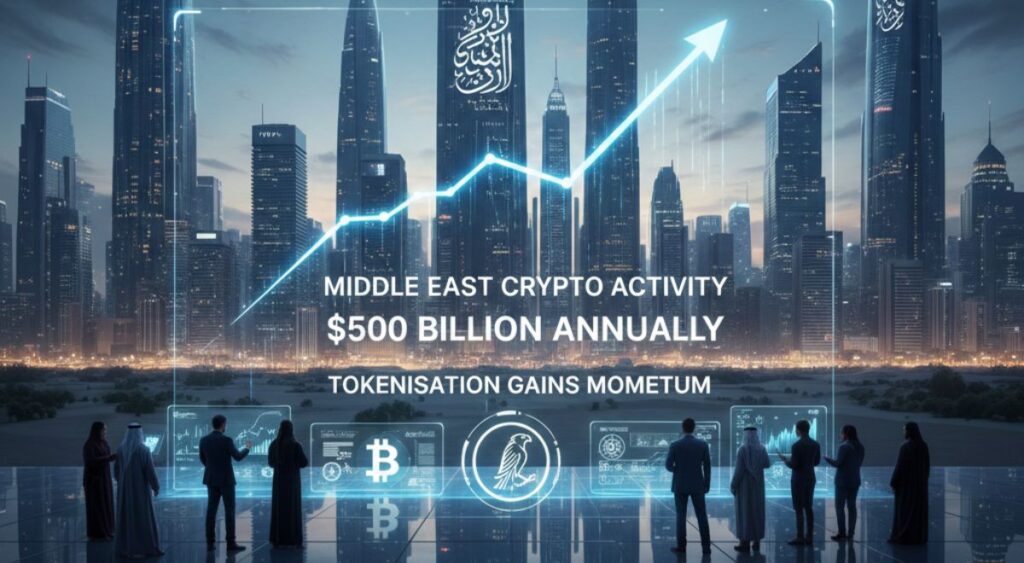
Cryptocurrency activity across the Middle East has crossed the $500 billion mark per year, highlighting the region’s rapidly expanding role in the global digital asset economy. This growth is being driven largely by rising institutional adoption and increasing interest in asset tokenisation.
Governments, financial institutions, and private enterprises across the region are actively exploring blockchain-based solutions to modernize financial systems, improve transparency, and unlock new investment opportunities. Tokenisation—where real-world assets such as real estate, commodities, and financial instruments are converted into digital tokens—is emerging as a key growth engine.
Countries in the Gulf, in particular, are positioning themselves as crypto-friendly hubs by introducing clear regulatory frameworks and encouraging innovation in blockchain technology. These policies have attracted global crypto exchanges, fintech startups, and institutional investors seeking a stable and well-regulated environment.
The surge in transaction volumes also reflects strong demand for faster, cheaper cross-border payments, an area where blockchain technology offers significant advantages over traditional banking systems. As trade, remittances, and investment flows continue to grow, digital assets are becoming an increasingly important financial tool.
Experts believe that as tokenisation platforms mature and regulations continue to evolve, the Middle East’s crypto market could expand even further, strengthening the region’s status as a global leader in digital finance and blockchain innovation.