
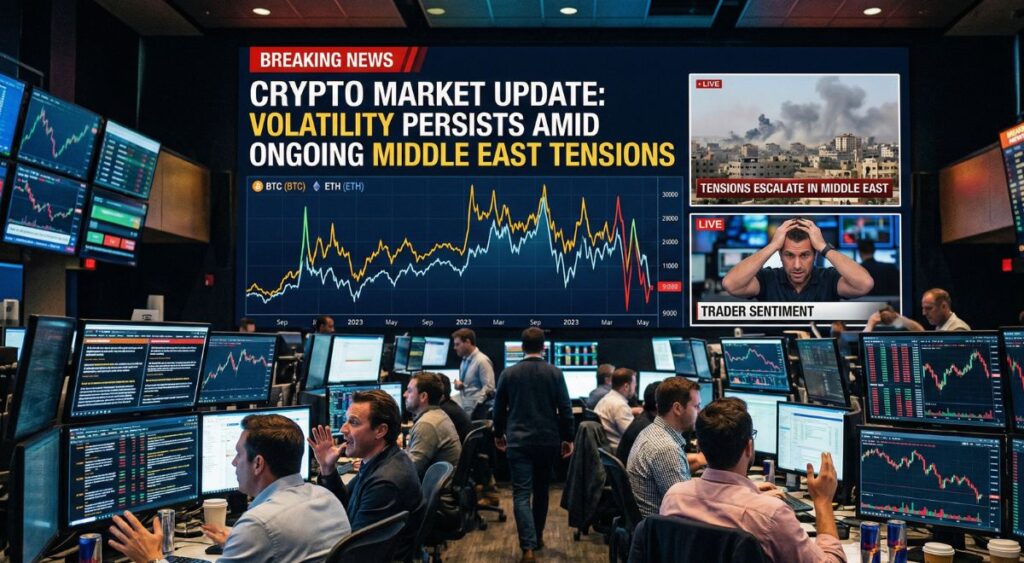
The global cryptocurrency market continues to experience heightened volatility as geopolitical tensions in the Middle East show no signs of easing. Investors remain cautious, with digital assets reacting sharply to each new development in the region. While some traders view the turbulence as an opportunity, others are shifting toward safer positions, creating an unpredictable market environment.
Market Overview
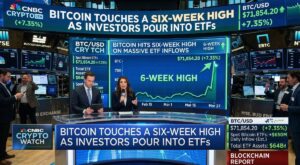
Major cryptocurrencies, including Bitcoin (BTC), Ethereum (ETH), and XRP, have been fluctuating within wide ranges over the past few weeks. Bitcoin, the market leader, has struggled to maintain consistent momentum, facing resistance near key psychological levels while finding support during brief recovery rallies.
Ethereum, on the other hand, has mirrored Bitcoin’s movements but with slightly higher volatility, driven by ongoing developments in decentralized finance (DeFi) and network upgrades. Altcoins have been even more sensitive, with sharp gains often followed by equally rapid corrections.
Impact of Geopolitical Tensions
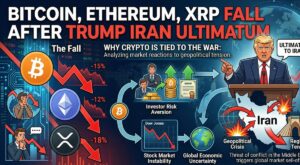
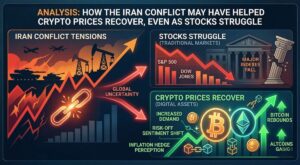
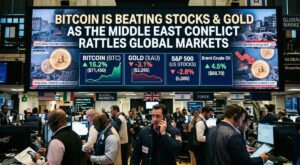
The ongoing conflict in the Middle East is influencing global financial markets, and cryptocurrencies are no exception. Traditionally seen as a hedge against instability, Bitcoin has shown mixed behavior during this period. At times, it has acted as a “digital gold,” attracting inflows during peak uncertainty. However, broader risk-off sentiment has also triggered sell-offs, as investors move capital into cash or more stable assets.
Energy market disruptions, particularly fluctuations in oil prices, are also indirectly impacting crypto. Higher energy costs can affect Bitcoin mining operations, potentially reducing profitability and influencing market supply dynamics.
Investor Sentiment and Market Behavior
Investor sentiment remains divided. Institutional investors are showing signs of caution, reducing exposure or waiting for clearer signals before making large moves. Retail traders, however, continue to drive short-term price swings, often reacting quickly to news headlines.
Market data indicates an increase in liquidations across derivatives platforms, highlighting the risks associated with leveraged trading during volatile periods. This has contributed to sudden price spikes and drops, further amplifying uncertainty.
Key Trends to Watch
Several important trends are shaping the crypto market during this time:
- Increased Correlation with Traditional Markets: Cryptocurrencies are moving more in line with global equities and commodities.
- Rising Demand for Stablecoins: Investors are parking funds in stablecoins to avoid volatility while staying within the crypto ecosystem.
- Focus on Safe-Haven Narrative: Bitcoin’s role as a hedge is being tested under real-world geopolitical stress.
- Regulatory Attention: Governments may accelerate crypto regulations as financial markets react to global instability.
Outlook
Looking ahead, the crypto market is likely to remain volatile as long as geopolitical uncertainty persists. Short-term price movements will continue to be driven by news flow and macroeconomic signals rather than fundamental developments alone.
However, long-term investors may view this period as a test of resilience for digital assets. If cryptocurrencies can maintain stability and attract capital during times of crisis, it could strengthen their position in the global financial system.