
Introduction: Trust as the New Digital Currency
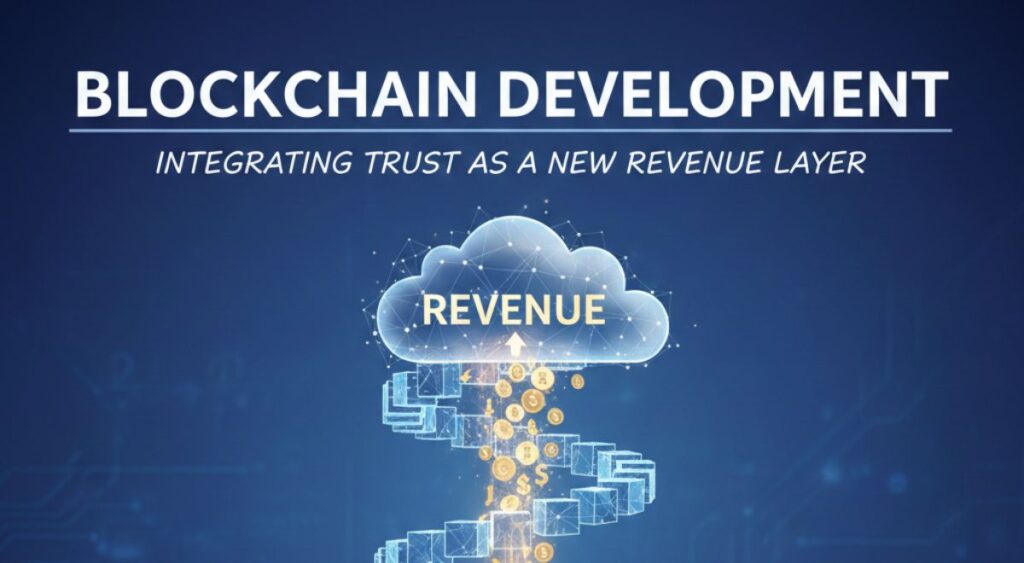
In the digital economy, trust has become one of the most valuable assets. As businesses shift toward decentralized technologies, blockchain development is emerging not only as a technical innovation but as a transformative economic model. Today, blockchain is redefining how trust is created, verified, and monetized—turning it into a new revenue layer across industries.
Rather than relying solely on traditional intermediaries, blockchain enables organizations to embed trust directly into digital systems. This shift is reshaping business models, unlocking new revenue streams, and accelerating the global adoption of decentralized solutions.
The Evolution of Blockchain: From Technology to Economic Infrastructure
Initially, blockchain was perceived as the backbone of cryptocurrencies like Bitcoin. However, its role has expanded far beyond digital currencies. Modern blockchain platforms now support smart contracts, decentralized finance (DeFi), non-fungible tokens (NFTs), supply chain management, digital identity systems, and enterprise applications.
This evolution has transformed blockchain into a foundational layer of digital infrastructure—one that allows trust to be automated, transparent, and verifiable. As organizations integrate blockchain into their operations, trust is no longer a cost center but a strategic asset that generates measurable value.
Trust as a Revenue Layer
Traditionally, trust has been maintained through intermediaries such as banks, legal institutions, auditors, and regulatory bodies. These systems are effective but often expensive, slow, and opaque. Blockchain disrupts this model by enabling peer-to-peer verification and immutable records.
By embedding trust directly into digital processes, blockchain creates new monetization opportunities, including:
- Decentralized platforms: Businesses can generate revenue by offering blockchain-based marketplaces and services without centralized intermediaries.
- Tokenized ecosystems: Digital tokens enable companies to monetize participation, loyalty, and governance within their platforms.
- Data integrity services: Verified data on blockchain can be sold as a premium service to enterprises and governments.
- Smart contract automation: Automated agreements reduce operational costs while creating scalable business models.
In this context, trust becomes a measurable, tradable, and monetizable layer of the digital economy.
Industry Applications Driving Value
1. Finance and DeFi
Blockchain is revolutionizing financial services by enabling decentralized lending, trading, and asset management. By eliminating intermediaries, DeFi platforms reduce transaction costs while increasing transparency. Trust is embedded in code, allowing users to participate in financial systems without relying on traditional institutions.
2. Supply Chain and Logistics
In global supply chains, blockchain ensures transparency and traceability. Companies can verify the origin, authenticity, and movement of goods in real time. This not only enhances consumer confidence but also creates new revenue opportunities through premium verification services.
3. Digital Identity and Security
Blockchain-based identity solutions empower individuals and organizations to control and monetize their data securely. Verified digital identities can streamline onboarding processes, reduce fraud, and open new markets for digital services.
4. Web3 and Creator Economy
In Web3 ecosystems, blockchain enables creators to monetize digital assets directly through NFTs and decentralized platforms. Trust between creators and audiences is enforced by smart contracts, eliminating the need for centralized platforms that extract high fees.
Business Implications: From Cost Reduction to Value Creation
For enterprises, blockchain development represents a shift from operational efficiency to strategic value creation. By integrating trust into digital systems, organizations can:
- Build stronger relationships with customers through transparency.
- Reduce compliance and verification costs.
- Launch innovative products and services based on decentralized models.
- Expand into global markets with borderless digital infrastructure.
As a result, trust is no longer an intangible concept—it becomes a tangible revenue driver.
Challenges and the Road Ahead
Despite its potential, blockchain development faces challenges such as scalability, regulatory uncertainty, interoperability, and user adoption. However, ongoing advancements in layer-2 solutions, cross-chain protocols, and regulatory frameworks are gradually addressing these issues.
In the coming years, blockchain is expected to integrate seamlessly with artificial intelligence, IoT, and cloud computing, further expanding its role as a trust infrastructure for the digital economy.
Conclusion: Trust as the Foundation of the Future Economy
Blockchain development is redefining how trust is created and monetized in the digital world. By transforming trust into a programmable and scalable resource, blockchain introduces a new revenue layer that extends across industries and business models.
As organizations embrace decentralized technologies, those who successfully integrate blockchain-driven trust into their strategies will gain a competitive advantage in the emerging digital economy. Ultimately, blockchain is not just a technological innovation—it is the foundation of a new economic paradigm where trust itself becomes the most valuable asset.