
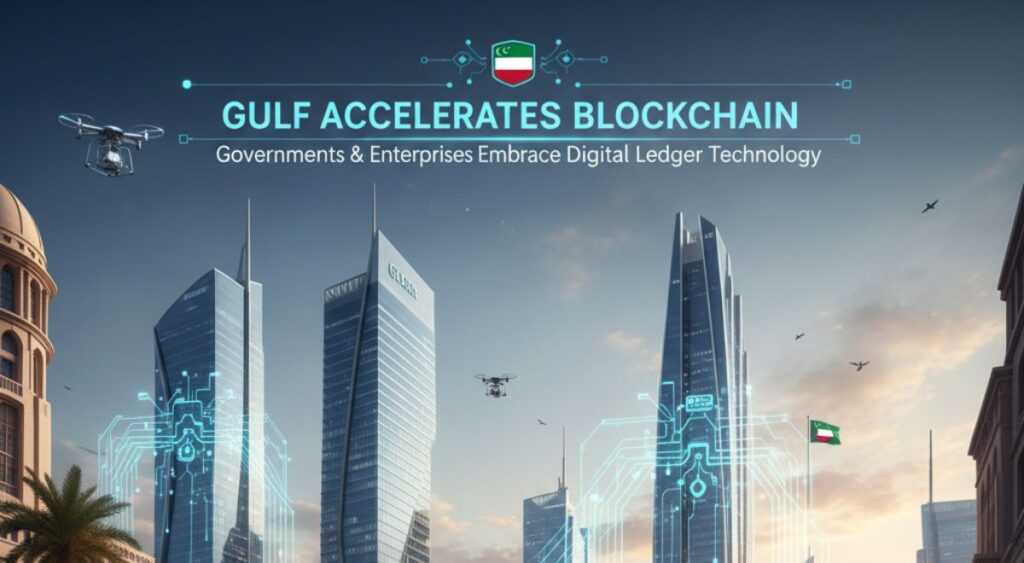
The Gulf region is witnessing a major transformation as blockchain technology moves from experimental use to large-scale implementation across government institutions and financial sectors. Countries across the region are increasingly recognizing blockchain not just as an emerging technology but as a foundational pillar of their digital economies.
In recent developments, governments have expanded blockchain integration into public services such as digital identity, land registries, healthcare data systems, and cross-border financial transactions. These initiatives aim to improve transparency, reduce operational costs, and enhance cybersecurity while building trust in digital systems.
Financial institutions across the Gulf are also embracing blockchain-driven solutions. Banks are adopting distributed ledger technology to streamline payment systems, improve compliance, and accelerate settlement processes. At the same time, fintech startups are leveraging blockchain to introduce innovative services such as decentralized finance platforms, tokenized assets, and smart contracts.
Regulatory clarity has played a crucial role in accelerating blockchain adoption. Policymakers across the Gulf have introduced frameworks that encourage innovation while ensuring compliance with international standards. This balanced approach has attracted global blockchain companies and investors seeking stable and forward-looking regulatory environments.
Beyond finance, blockchain is being applied across sectors such as logistics, energy, real estate, and government services. Experts believe that the Gulf’s strategic investments in blockchain infrastructure could redefine how digital ecosystems operate across the region.
As blockchain technology continues to evolve, the Gulf region is positioned to become one of the world’s leading centers for Web3 innovation and digital transformation.