

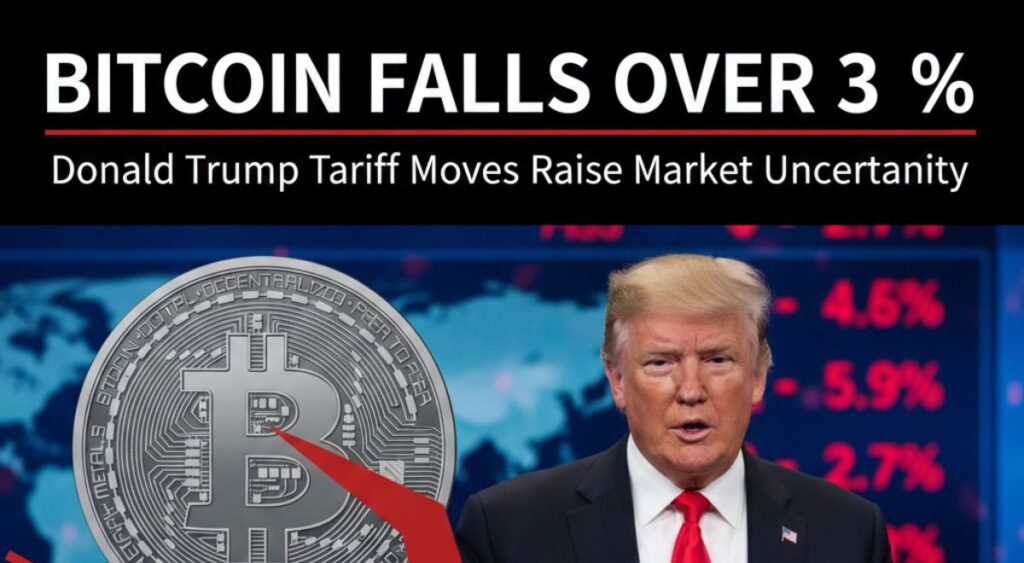
Bitcoin dropped more than 3% in recent trading sessions as renewed tariff proposals linked to former U.S. President Donald Trump created fresh uncertainty across global financial markets. The decline reflects growing investor caution as geopolitical and economic tensions begin to weigh on risk-sensitive assets, including cryptocurrencies.
Market Reaction to Tariff Announcements
Financial markets reacted swiftly after announcements surrounding potential new tariffs on imported goods. Analysts say that trade restrictions often increase volatility in equities, commodities, and digital assets. As a result, Bitcoin—commonly viewed as both a speculative asset and a hedge against traditional financial instability—faced short-term selling pressure.
Investors typically move funds into safer assets such as bonds or the U.S. dollar during periods of trade uncertainty. This “risk-off” sentiment can temporarily reduce demand for cryptocurrencies, leading to price pullbacks.
Why Bitcoin Is Sensitive to Trade Policy
Although Bitcoin operates independently of governments, it remains highly influenced by global macroeconomic conditions. Tariff hikes can:
- Increase inflation expectations
- Slow global economic growth
- Strengthen the U.S. dollar
- Reduce liquidity in financial markets
All of these factors can impact cryptocurrency valuations. When liquidity tightens, speculative investments like Bitcoin often experience stronger price swings.
Broader Crypto Market Impact
The broader crypto market also felt the pressure, with major altcoins posting modest losses alongside Bitcoin. Market analysts note that institutional investors now play a larger role in crypto trading than in previous cycles. This means digital assets increasingly move in correlation with traditional financial markets during macroeconomic events.
Long-Term Outlook
Despite the short-term decline, some crypto analysts argue that geopolitical instability and trade tensions could ultimately support Bitcoin’s long-term narrative as a decentralized alternative to fiat currencies. Historically, Bitcoin has recovered from similar macro-driven pullbacks.
For now, traders remain cautious, closely monitoring further developments in U.S. trade policy and global economic signals. Whether the current dip represents a temporary correction or the start of a broader consolidation phase will likely depend on how markets digest the evolving tariff situation.