

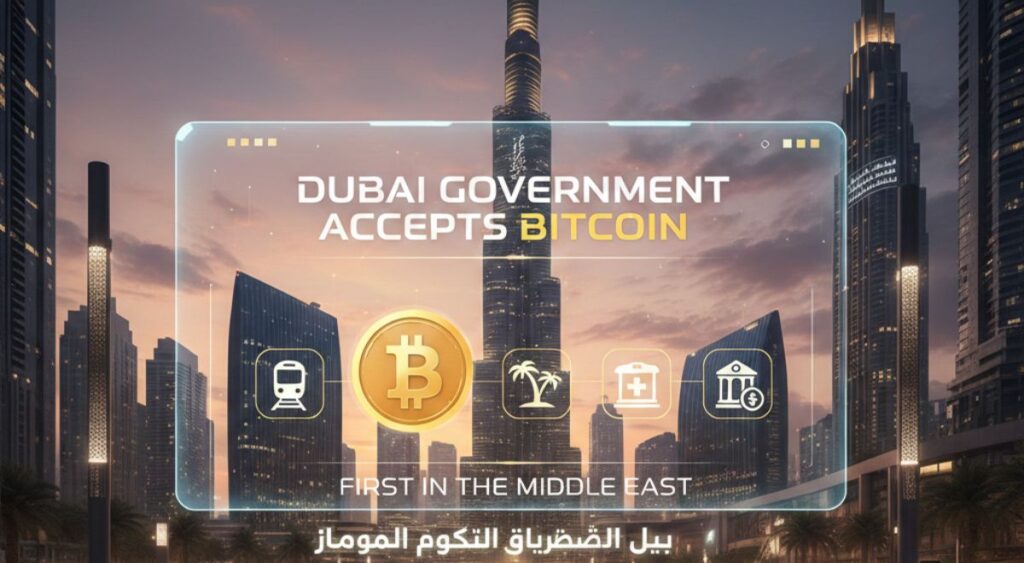
In a landmark move that reinforces its reputation as a global innovation hub, Dubai has officially become the first government in the Middle East to accept Bitcoin and other cryptocurrencies for government services. Residents and businesses can now use digital assets to pay for licenses, fines, and various government fees — marking a historic shift in how public services are financed.
This initiative is being managed by the Dubai Virtual Assets Regulatory Authority (VARA), the regulatory body responsible for overseeing and developing Dubai’s virtual asset ecosystem. The move signals more than just technological progress — it represents a strategic transformation in financial infrastructure.
From Speculation to Governance
For years, cryptocurrencies such as Bitcoin were largely viewed as speculative investments. Their volatility often overshadowed their real-world utility. However, Dubai’s decision shifts the narrative. By integrating digital assets into official government payment systems, crypto is no longer confined to trading platforms — it is entering everyday governance.
This development effectively bridges the gap between decentralized finance and traditional public administration. Instead of being an alternative system operating outside regulation, crypto in Dubai is now embedded within a structured and regulated framework.
Strengthening Dubai’s Global Position
Dubai has consistently positioned itself at the forefront of digital transformation. From blockchain-powered initiatives to smart city infrastructure, the emirate has embraced emerging technologies as part of its long-term economic strategy.
Accepting cryptocurrency payments:
- Enhances financial inclusion
- Attracts global crypto investors and entrepreneurs
- Strengthens Dubai’s image as a fintech leader
- Diversifies payment channels within government systems
By embedding crypto payments into public services, Dubai is not merely adopting a trend — it is institutionalizing digital finance.
A Model for Other Nations?
This move could set a precedent for governments worldwide. If successfully implemented, it may encourage other countries to explore regulated crypto integration for tax payments, licensing, and public utilities.
The decision reflects growing global recognition that digital assets are evolving beyond speculative tools. Governments are beginning to understand that regulated crypto infrastructure can coexist with traditional financial systems.
A Structural Shift in Finance
This is not hype. It is a structural shift.
When a government accepts cryptocurrency for official payments, it validates digital assets at an institutional level. It signals confidence in blockchain technology and demonstrates readiness for a digital-first economy.
Dubai’s step could mark the beginning of a new era where cryptocurrency becomes part of daily civic life — not just an investment asset, but a functional medium of exchange within government systems.