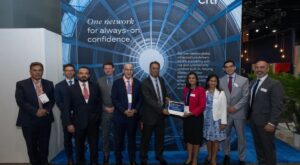


The Abu Dhabi–based ADI Foundation, a leading blockchain infrastructure initiative, returned to Abu Dhabi Finance Week (ADFW) this year to highlight its rapid progress since announcing its formation at the same event last year. In just twelve months, the organisation has evolved “from concept to execution,” according to Chief Executive Officer Andrey Lazorenko, who emphasised its mission to support governments and institutions in building advanced digital economies.
Lazorenko explained that ADFW serves as a global stage for showcasing ADI Foundation’s achievements, including the launch of the ADI Chain Mainnet. This blockchain network is engineered specifically for institutional and government use, and already operates in partnership with more than 20 countries and 50 organisations. He described the initiative as representing a new and transformative approach to blockchain innovation, supported by national-level pilot projects in several regions.
He highlighted several newly announced strategic partnerships aimed at integrating ADI Chain with major global financial institutions. These collaborations are expected to accelerate real-world blockchain applications, promote regulated stablecoins, and strengthen institutional digital finance in alignment with Abu Dhabi’s ambition to become a global leader in regulated digital assets.
According to Lazorenko, the UAE has advanced from early testing phases to establishing one of the world’s most sophisticated environments for digital assets and web3 technologies. He noted the importance of ADI Foundation’s headquarters within Abu Dhabi Global Market (ADGM), the first jurisdiction worldwide to implement a dedicated legal framework for digital assets, currency-referenced tokens and distributed ledger technology entities. This regulatory clarity, he said, creates national-level confidence and lays the groundwork for sustainable digital transformation.
Lazorenko added that the UAE’s economic stability, world-class infrastructure and strategic location have positioned it as a frontrunner in sovereign blockchain development, digital asset regulation and progressive web3 policy-making.
He outlined ADI Foundation’s role in converting forward-thinking policy into functional, scalable systems—whether through a dirham-backed stablecoin or compliant models for asset tokenisation and cross-border payments.
The Foundation aims to support an ambitious vision of onboarding one billion people into the digital economy by 2030. This includes developing local talent capable of deploying large-scale digital systems through the FutureTech 4.0 Academy. Lazorenko noted that, despite global progress, 1.4 billion people still lack access to basic financial infrastructure, and working directly with governments and large institutions is key to reaching underserved communities.
He also highlighted the organisation’s strong partnerships with Sirius International Holding and IHC, giving ADI access to more than 90 entities capable of integrating blockchain into their ecosystems. These collaborations span energy, real estate, digital identity and other national sectors, alongside cooperation with international financial institutions to promote blockchain-based solutions, regulated stablecoins and digital finance across emerging markets.
These alliances, he said, help reduce adoption risks for governments, fund pilot programmes and support high-impact social initiatives on ADI Chain—laying a clear path to reaching hundreds of millions, and ultimately one billion, users.
Lazorenko emphasised that ADI Chain is tailored for governmental and institutional needs, offering strong scalability and alignment with local regulations. This makes it suitable for applications such as national digital identity, public records and trusted government services that require transparency, security and compliance.
One of the key upcoming initiatives on ADI Chain is a dirham-backed stablecoin developed by IHC and First Abu Dhabi Bank. Built within the UAE’s regulatory framework, it aims to address the limitations of traditional payment systems and provide fast, secure and cost-efficient transactions for individuals, businesses and cross-border transfers—while preserving monetary and regulatory sovereignty.
On the subject of talent development, Lazorenko stressed that technological innovation must be matched by human capability. The FutureTech 4.0 platform, created in collaboration with ADGM and leading global universities, aims to train over 10,000 specialists in web3 technology, regulation, development, operations and policy to support the next wave of digital transformation.