
The growing financial ties between the Middle East and Asia are creating new opportunities for digital currencies, with stablecoins emerging as a potential tool for improving cross-border payments and financial settlement between the two regions.
Although stablecoin adoption remains at an early stage, digital tokens pegged to traditional currencies are increasingly being explored beyond cryptocurrency trading. Their potential applications now include international payments, corporate treasury operations and transaction settlement.
The UAE and Singapore are emerging as important markets for this development. Both financial centres have moved early to establish regulatory frameworks and digital-asset infrastructure, positioning them to explore how stablecoins could operate alongside traditional banking systems.
The potential benefits extend beyond simply making payments faster. Companies transferring funds between the Middle East and Asia often have to manage different currencies, banking networks and regulatory requirements. Stablecoins and other forms of digital money could provide an additional connection between these systems, potentially allowing businesses to access funds more quickly and reduce the amount of capital held up during settlement.
Traditional financial networks are also beginning to incorporate stablecoins into existing payment infrastructure, suggesting that digital currencies could develop alongside conventional banking rather than operate as a replacement.
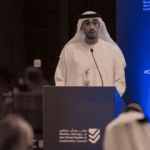
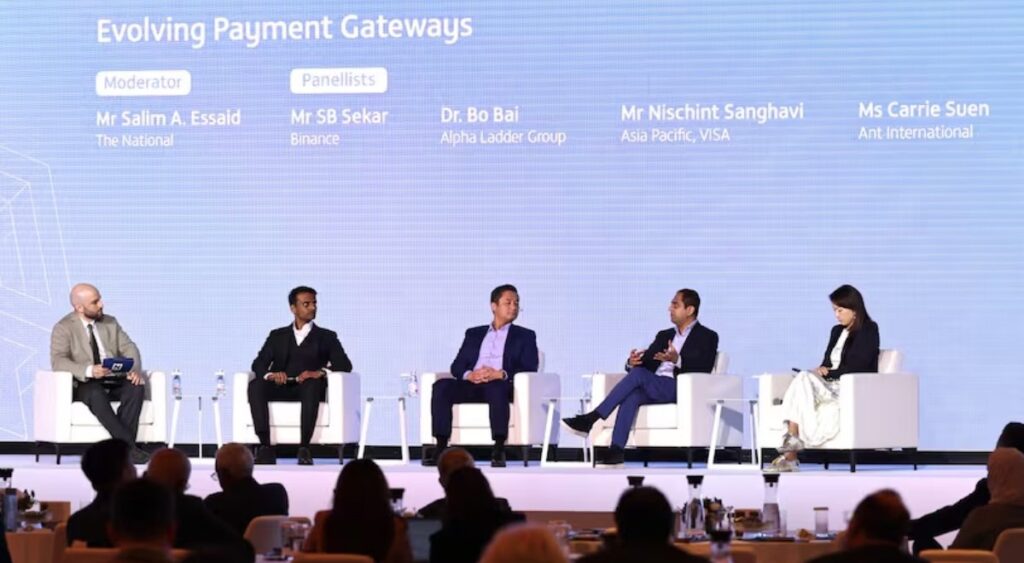
Nischint Sanghavi, Visa’s head of digital currencies for the Asia Pacific region, said the company’s approach is focused on connecting different forms of money and financial infrastructure.
Speaking on the sidelines of the First Abu Dhabi Bank Middle East Summit in Singapore on Thursday, Sanghavi said the objective is to support interoperability between different monetary systems and financial networks.
The development of stablecoin-based payments could therefore become an important part of the evolving financial relationship between the Middle East and Asia, particularly as businesses and financial institutions explore more efficient ways to move money across borders.